


The Houthis’ Offensive Is the Latest Spillover from Trump’s Iran Disaster | Mohamad Bazzi
When the US and Israel launched a war of aggression against Iran in late February, Tehran’s allies in the Middle East jumped into the fray. Lebanon’s Hezbollah militia fired rockets at Israel, while Shia militias in Iraq attacked US bases and diplomatic outposts. But the Houthis, who control large parts of Yemen, mostly stayed on the sidelines.
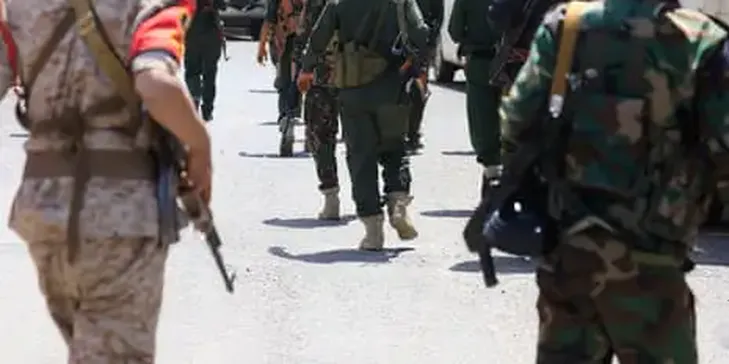
Over the past few weeks, however, the Houthis have changed their tactics and have entered the conflict in full force. They led a rapid advance along Yemen’s Red Sea coast, seizing a strategic port city and several islands that gave the militia control over the Bab al-Mandab strait, a vital waterway for energy shipments and other global trade. Thanks to Donald Trump’s war, Iran and its allies now dominate the Middle East’s two major regional energy chokepoints: Bab al-Mandab and the strait of Hormuz.
And Trump’s misadventure in Iran has unleashed other unintended consequences: it has rekindled Yemen’s civil war, and a related years-long conflict between the Houthis and Saudi Arabia. In recent days, the Houthis have expanded their offensive beyond the Red Sea coastline, targeting two provinces in Yemen’s eastern region, which is home to the country’s largest oil and gas fields. Those areas, including the resource-rich Marib province, are under the control of Yemen’s internationally recognized government, which is supported by Saudi Arabia. If the Houthis can capture those regions, it would be their biggest territorial advance in more than a decade.
The renewed fighting has displaced more than 100,000 people inside Yemen, and forced thousands of others to flee across the Red Sea into Djibouti. Even before the latest escalation, Yemen was facing one of the world’s worst humanitarian crises, with nearly half the population – about 22 million people – needing relief aid and protection, according to the United Nations.
The Houthi-Saudi conflict will also impact global energy supplies and prices: the militia has attacked oil facilities and other infrastructure inside Saudi Arabia, in retaliation for Saudi airstrikes on Houthi-ruled areas of Yemen. After the two sides agreed to a UN-brokered ceasefire in 2022, there were occasional skirmishes but the truce largely held until mid-July. That’s when Saudi airstrikes struck the main airport in Yemen’s capital, Sana’a, which is under Houthi control. The Saudi-aligned Yemeni government claimed the attack was intended to stop an Iranian plane from landing at the airport, and to enforce an air and naval blockade that Saudi Arabia had imposed years ago against Houthi-controlled parts of Yemen. The Iranian plane was carrying a delegation of Houthi officials on their way home from the funeral of Iran’s supreme leader, Ali Khamenei, who was assassinated by US-Israeli airstrikes in the war’s early hours.
On 20 July, the Houthis declared a siege on Saudi ships transiting the Red Sea through the Bab al-Mandab strait, saying it would only be lifted when the kingdom removed its own blockade on Houthi territory. After Iran shut down the strait of Hormuz, through which a fifth of the world’s energy supplies transited before the recent war, Saudi Arabia was forced to move much of its oil shipments via its east-west pipeline to Saudi ports along the Red Sea. That exposed Saudi dependence on both the Hormuz and Bab al-Mandab waterways.
After announcing their blockade in July, the Houthis fired on several Saudi vessels in the Red Sea, forcing the kingdom to reroute a significant portion of its oil exports to Asia through a far longer and more expensive journey. That alternative route can take ships more than 30 days, and it involves transiting through the Suez Canal, the Mediterranean Sea, and around the southern tip of Africa, before finally reaching customers in Asia, who buy the bulk of Saudi oil.
To make matters worse for the Saudis – and global oil prices – the east-west pipeline was struck recently by a drone attack blamed on Iranian-backed Shia militias in Iraq. Saudi officials were forced to shut down the nearly 750-mile-long pipeline on 11 September, and it’s unclear how long repairs will take. If the network is offline for a month, it could reduce global oil supply by 120m barrels and raise crude prices as high as $120 a barrel.
As the Houthis carried out their lightning offensive along Yemen’s Red Sea coast, Saudi Arabia’s crown prince and de facto ruler, Mohammed bin Salman, reportedly called Trump twice on 10 September, urging him to order US airstrikes against the Yemeni rebels. For now, Trump has ruled out direct US attacks against the Houthis, despite the appeals from his ally and benefactor Prince Mohammed. (After a mob of Trump supporters stormed the US Capitol in January 2021, several US banks and large companies distanced themselves from the president’s family business, the Trump Organization. But Saudi Arabia and its crown prince became a crucial source of new real estate and other deals for the family firm while Trump was out of power.)
Trump’s decision to keep the US out of the Houthi-Saudi conflict is one of the best foreign policy choices of his second term so far, although it’s dwarfed by his catastrophic decision to launch a war against Iran. Trump seems to realize that neither the US, Saudi Arabia nor other Arab states have been able to bomb the Houthis into submission – despite trying for more than a decade.
Yemen’s civil war has been a complex conflict for decades, with Saudi Arabia, Iran and the US supporting different factions at various times. The Houthis, who are officially known as Ansar Allah (the Partisans of God), emerged in the 1990s as a Shia tribal movement based in northern Yemen that fought multiple battles against the central Yemeni government and other tribes aligned with Saudi Arabia. The conflict escalated significantly in September 2014, when the Houthis overran Sana’a, and within a few months forced the internationally recognized government to flee to the kingdom, which shares a long border with Yemen.
In early 2015, Saudi Arabia led a coalition of Sunni Arab states to intervene in the war, trying to push the Houthis out of the capital and restore Yemen’s Saudi-backed government into power. Barack Obama and his administration supported the Saudis and their allies, especially the United Arab Emirates, with US weapons and extensive intelligence sharing.
Despite thousands of airstrikes and a Saudi-led blockade, the Houthis survived the onslaught. Yemen was effectively divided into two states, with the Houthis in control of Sana’a and large parts of the north, while the Yemeni government controlled much of the south and a competing capital in the port city of Aden. After seven years of stalemate, Saudi Arabia decided to cut its losses and agreed to a ceasefire with the Houthis in 2022, after which the group stopped its attacks on Saudi territory until resuming them this summer.
Negotiations over a permanent peace agreement in Yemen stalled for several years, mainly over economic incentives for the Houthis and recognizing the militia’s rule over parts of Yemen. In recent weeks, the Houthis sensed an advantage in the regional chaos and global economic turmoil unleashed by Trump’s war on Iran.
The Houthis are trying to gain new leverage by taking control of their own regional energy chokepoint and capturing more territory from their enemies in Yemen. For now, no one seems to be able to stop them.
-
Mohamad Bazzi is a Guardian US columnist. He is also director of the Center for Near Eastern Studies and a journalism professor at New York University